
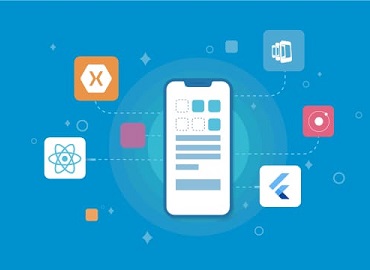
Top Mobile App Development Frameworks in 2023
By CHRISTOPHER STERN
Mobile application frameworks are development tools that are becoming more and more popular worldwide for creating applications in a straightforward manner without wasting valuable time and money on resources. The reason for their exponentially growing popularity is the increased need for mobile applications brought on by the large audience base for mobile devices and organizations transitioning from a traditional to a contemporary approach.
The mobile app development market was seen growing to generate revenue of around $100 USD billion in 2022, at a rate of GR 14 percent annually. These statistics demonstrate the market’s rising demand for mobile applications, and in order to satisfy such demands, innovative tools capable of producing mobile applications in the shortest amount of time while staying within a reasonable budget are needed.
By 2023, these tools—which are mobile application frameworks—will have completely transformed the market for mobile app development. The top 10 frameworks for mobile app development will be examined in this blog post. So let’s get going.
What is Mobile Development?
Making installable software programs for mobile devices is known as mobile development. Programming languages like C, C++, C#, or Java are used by mobile developers. They choose the mobile operating system they will build for (Apple iOS or Google Android), and then they study the appropriate programming language and software development environment. Traditional software development is essential for mobile application development, just like it is for web application development. Mobile applications, on the other hand, are typically specifically built to take use of a certain mobile device’s special characteristics. For instance, a game app may be created to make use of the iPhone’s accelerometer capability.
What are the Benefits of Mobile Development?
Everyone today is eager to use mobile applications for their personal gain, whether it be for scheduling, increasing productivity, or for amusement. These smartphone applications are simple to use, quick, and created to meet specific requirements.
Businesses all around the world are moving to the mobile market to enhance productivity and stay competitive. Applications for mobile development are advantageous for organizations in the following ways:
1. Increasing Customer Engagement
Customized business applications aid in establishing a direct line of contact between businesses and their clients, facilitating open and efficient communication.
2. Enhances Effectiveness
Corporate applications accomplish a variety of tasks, boost employee productivity, and ultimately raise business ROI since they are specifically designed to meet business needs.
3. Give your clients more value
Your clients will be able to obtain their loyalty points or prizes through the app rather than the conventional collection card if you build a customer loyalty program inside your mobile app. More app downloads and repeat business may follow from this.
4. Increase brand recognition and awareness
Mobile applications are like bare billboard banners; they are the ideal medium for showcasing the values of your company. They support the development of your brand and inform your clientele. Customers are more inclined to trust you and interact with your business if you engage them through the app on a regular basis.
5. Boost Profits
When creating mobile applications for businesses, it’s critical to keep expenses as low as possible. An excellent way to increase sales and improve the customer experience is to release a mobile app in addition to a responsive brand website. Because they are simpler to use, mobile applications drive greater purchases.
Let’s talk about the top mobile development application frameworks now.
Best Mobile Development Frameworks of 2023
1. React Native App Development
React Native is a JavaScript-based application development framework that Facebook released in 2018. Worldwide, there is a huge demand for this framework, with 42 percent of mobile app programmers utilizing it regularly. The platform’s popularity stems from the fact that it enables developers to create mobile applications for both Android and iOS devices with a natural look and feel.
This framework’s primary feature—cross-platform app development utilizing a single piece of code—makes it incredibly popular with app developers and company owners, especially start-ups. Because it is time- and cost-effective, it enables start-ups to remain competitive in the market.
2. Flutter App Development
Google’s Flutter is a user interface toolkit that enables the creation of visually appealing, native-like applications for a variety of operating systems and devices using a single codebase. This open-source mobile app SDK uses widgets to enable the development of responsive mobile applications. This feature makes it possible for developers to quickly modify current applications and create new ones. Additionally, there is a 2D graphics engine called Skia that enables developers to create a really native feel per the client’s request.
3. Ionic
Ionic is an open-source mobile application framework that is available for free. It is founded on angular and Apache Cordova. This framework enables developers to build cross-platform mobile applications for Android, iOS, and Windows. Ionic-built mobile applications are robust, feature-rich, native applications with seamless application performance.
With the help of the Ionic framework, app developers can integrate UI components including list views, filters, forms, action sheets, navigation menus, and more to boost application design.
The Ionic framework is ideal when developers have hands-on experience with coding languages like HTML, JavaScript, or SS and the company owner wants to create interactive, high-performance hybrid/cross-platform mobile applications and progressive online applications.
4. Xamarin
Miсrоsоft’s Xamаrin is аn орen-sоurсe, сrоss-рlаtfоrm mоbile арр frаmewоrk. This framework enables the creation of best-in-class mobile applications by employing a software framework that incorporates programming languages like Net and #. The mobile applications developed using Xamarin have a flexible native performance that offers end-users a unique user experience. Using Xamarin, developers may create an ecosystem that consists of a foundation, components, and more. Additionally, Xamarin makes it much simpler to integrate several tools, libraries, and programming languages to simplify app development.
5. Corona SDK
A popular open-source, free platform for developing mobile game applications is the Corona SDK. This framework is based on the Lua scripting language, which is adaptable for developing game applications and lightweight and simple to use.
For the development of cross-platform mobile game applications that can be accessed via several platforms including iS, Android, and Nook, the Orona SDK is frequently employed.
6. Appcelerator Titanium
An open-source, cross-platform app development framework called Accelerator enables developers to create native apps for platforms like Android, iOS, and Windows with only one piece of code. It uses pre-existing and built-in UI components to simplify app development and speed up the development of user-friendly mobile applications. Accelerator incorporates its own Is and U components to create a high-performance application.
7. Native Script
Native Script is a mobile app development framework that enables the creation of native applications for both Android and iOS using a single piece of code. The user interface is rendered using Native Script employing native Is such as Angular, JS, Vue.js, SML, SS, and others rather than web views. By leveraging all iOS and Android devices, it offers native-like performance for applications.
8. PhoneGap
PhoneGap is a mobile app development framework that functions across a variety of platforms. Its primary languages are HTML5 and SS3, which enable it to be adapted to hardware components like cameras, accelerometers, and GPS. PhoneGap is very easy to use and enables developers to create a single app that can be accessed across several devices.
Over to you
As technology continues to advance, it won’t be wrong to presume that 2023 will not bring new mobile app development frameworks. However, all we ca do is wait. Nevertheless, these were our top frameworks to use and implement for your business to scale up.
In case you are not able to find a suitable solution, get in touch with a Mobile app development company that can resolve all your issues and queries and help you choose the perfect framework for your app development needs.