
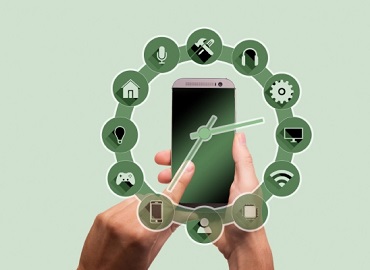
Building a Smart Home Automation App: Opportunities, Challenges, Process, Costs
By Sudeep Srivastava
With advanced technologies seamlessly integrated into every aspect of daily living, we are now experiencing the highest level of convenience and comfort like never before. Smart home app development is at the core of this revolution. With the help of smart home apps, homeowners can remotely control various components of their houses, including lighting, temperature, security, and entertainment systems.
These applications use Internet of Things (IoT) technology to connect devices for building a connected home environment. Smart home apps improve quality of life by providing automation, energy savings, and greater security through customizable user interfaces and cutting-edge functionality.
Smart home app development opens up a world of opportunities and reshapes how we interact with our living places. With the flexibility, efficiency, and remotely-operational features, it’s no wonder that smart home market size is estimated to be a staggering $222.90 billion by 2027.
As demand continues to grow, so do the opportunities for smart home automation apps. These user-centric solutions make managing smart homes and devices a breeze.
How Does Smart Home Automation Work?
Smart home automation utilizes a central hub directly connected to smart devices through wireless technology. This hub connects with devices like thermostats, lights, and cameras through remote control from smartphone applications or voice commands. You can create a routine or schedule a few automated actions, like turning off the lights when you leave home. This hub can also be integrated with virtual assistants like Google Assistant or Alexa for added control.
Smart home automation increases convenience, energy efficiency, and security by establishing a connected network that improves daily life and customizes the home environment.
Factors Affecting the Cost to Build a Smart Home Automation App
When you decide to create a smart home automation app, many factors can impact the overall cost. From the complexity of the application to the number of devices it will control, each aspect must be carefully considered for analyzing the cost of building a smart home automation app. Let’s have a look at them:
Complexity of Features
The smart home automation app development cost will be significantly impacted by the complexity and quantity of features you wish to include. Compared to more sophisticated capabilities like voice control, geolocation, or connection with third-party services, basic functionality like device control and scheduling could be less expensive.
Platforms and Devices
The cost may differ based on whether you opt to support iOS, Android, or both. Additionally, the development cost can go up because more integration work is required if you want your app to work with different smart home devices and protocols like Wi-Fi, Zigbee, or Z-Wave.
Designing UI/UX
Attention to detail is critical when creating an intuitive and visually appealing UI/UX design. The design complexity and the need for unique animations, graphics, or branding features can impact the cost of development. If you’re looking for a design that stands out and captures your audience’s attention, consider investing in high-quality UI/UX design elements.
Integration with Hardware and APIs
Integrating your app with specific smart home devices can be a challenging task. If you work with their hardware and APIs, the design may require more time and effort. Compatibility and interoperability issues can also increase the complexity and cost of the project. However, these challenges can be handled with the right approach and expertise.
Security and Data Privacy
Smart home app development involves working with sensitive data and strong security mechanisms. In such cases, the cost to build a smart home automation app may increase if robust security measures are implemented and data protection laws are followed.
Location and Expertise of the Development Team
The cost to build a smart home automation app may be affected by the development team’s geographic location and experience level. Depending on the team’s location, the rates may vary.
Therefore, the total cost of building a smart home automation app can range anywhere between $20,000 – $150,000, depending on the features and other complexities of the application. By discussing your specific needs with a smart home app development company like Appinventiv, you can obtain a more precise estimate of the expenses involved. This will ensure you receive a tailored solution that meets your unique requirements. Read this blog to learn about the cost of developing an IoT app.
Let’s move on to the next section of how to make a smart home automation app.
Steps to Create a Smart Home Automation App
Developing a successful and user-friendly smart home app entails numerous crucial steps. Let’s check those out:
Defining the Function and Features
To develop a smart home automation app, you need to first decide on the features and functionalities of the app. This entails determining the app’s features, such as managing smart devices, establishing automation rules, or keeping track of energy usage. To properly design the app, it is also necessary to comprehend the target audience’s particular demands and preferences.
Market Research and Analysis
Once the function and features of the app have been decided upon, conducting thorough market research is essential. This study aids in identifying the competition, existing smart home apps, and their advantages and disadvantages. You can learn how to differentiate your app from the competition and provide special value by researching pricing strategies, user experiences, and customer feedback used by rivals.
UI/UX Design
Developing smart home apps requires meticulous design, starting with creating the user interface (UI) and user experience (UX). An attractive and simple interface is vital to boosting user engagement and satisfaction. You can envision the app’s structure, navigation flow, and element placement by creating wireframes, mockups, or prototypes.
Backend Development
Setting up the necessary servers, databases, and APIs for data management and communication is required. After the design is complete, the backend architecture of the app is constructed. The app’s ability to manage user interactions, store data, and interface with various smart home systems and devices is ensured using a secure and scalable backend architecture.
Frontend Development
The frontend components of our app are crucial to delivering a seamless user experience. Smart home app developers prioritize writing code in the proper programming languages and frameworks to achieve this. The team focuses on developing and integrating functions such as device control, automation, scheduling, and data monitoring with the backend infrastructure. By doing so, the development team ensures that your app looks great and functions flawlessly.
Testing and Troubleshooting
The software’s reliability and performance greatly depend on testing and troubleshooting. To find and fix any flaws, errors, or inconsistencies in the software, thorough testing is done. While compatibility testing is carried out on many platforms and devices to guarantee a consistent user experience, functional testing ensures that all functionalities operate as intended.
Ongoing Support And Maintenance
Finally, ongoing app support and maintenance are essential for success over time. Updates are frequently published to address bug fixes, security patches, and compatibility problems. Maintaining a great user experience involves providing excellent customer service and attending immediately to consumer inquiries or issues. The app will function best in the changing smart home ecosystem if it is updated with technological developments and market trends.
Collaboration between designers, developers, and stakeholders is essential for a successful and unified conclusion throughout the entire smart home app development process. Let us now move to our next point of discussion, the key smart home automation app features.
Key Features of a Smart Home App
Applications for smart home automation often provide several capabilities that let customers remotely control and manage various parts of their homes. The following are some typical smart home automation app features you will want:
Voice Control
Integration with voice assistants like Apple Siri, Google Assistant, or Amazon Alexa enables voice commands for device control.
Device Control
Allows users to control various smart devices from a single interface, including lighting, thermostats, door locks, security cameras, appliances, and more.
Schedule Timers
Users can set schedules and timers for automatic operations, such as turning lights on and off or modifying settings at certain times.
Remote Access
Remote access enables users to monitor and manage the components of their smart home from any location using a smartphone device.
Push Notifications
Users can receive real-time push notifications and alerts for events like motion detection, door or window openings, smoke or carbon monoxide alarms, etc., on their smartphones or other devices.
Integration with Third-Party Devices and Services
This feature enables smooth control and automation across many brands and ecosystems by being compatible with and integrated with a wide range of smart home platforms and devices.
Data Analytics and Insights
Users can access information about the smart home devices they own, their energy usage, usage trends, and optimization suggestions.
These functionalities may change depending on the particular smart home automation application and the devices it supports. Before making a choice, reviewing an application’s features and compatibility is advised.
Now that you have known the top features let’s move on to understand the smart home automation app benefits and opportunities.
Opportunities of Developing Smart Home Automation App
By developing a smart home automation app, you can tap into this growing market and offer your customers a convenient and efficient way to manage their homes. Let’s have a look at some of the opportunities for developing a smart home app:
Energy Efficiency
Smart home apps let consumers watch and manage their energy use. These apps aid energy-saving efforts and encourage sustainability by giving information about energy usage and enabling automated adjustments.
Integration with Voice Assistants
Voice-controlled automation is made possible by integrating smart home automation apps with well-known voice assistants like Amazon Alexa or Google Assistant. Voice commands are a simple way for users to conveniently handle their smart home systems and appliances, which adds another level of accessibility and convenience.
Personalization and Customization
With the help of smart home apps, consumers can adapt their living space to suit their tastes. They can customize settings for each device, make timetables, and create customized scenarios, which improves comfort and individuality.
Understanding customer wants, prioritizing security and privacy, providing a seamless user experience, and keeping up with technological advancements and market trends are all necessary to take advantage of these opportunities. Let’s delve deeper into the challenges of smart home app development.
Challenges Associated With the Smart Home Automation App Development Process
A smart home app’s development presents several challenges. Here are a few obstacles that you could encounter during smart home app development:
Security and Privacy
Smart home apps handle private user information and physical device management. Critical concerns include establishing reliable security measures, safeguarding user privacy, and avoiding unwanted access or data breaches.
Device Compatibility
Many different types of smart home devices and protocols are available on the market. It cannot be easy to guarantee compatibility and seamless integration with various devices.
Interoperability and Connectivity
Smart home apps must be able to interact and communicate with various devices, frequently using different communication protocols. Providing seamless connectivity and interoperability across multiple platforms and technologies might be difficult.
Performance Optimization
Managing the performance of a smart home app can be challenging, particularly when working with several devices and data streams. Key concerns include enhancing response times, reducing resource utilization, and managing future scalability problems.