
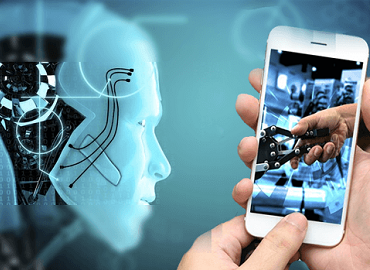
The Role of Artificial Intelligence (AI) in Mobile App Development
By james border
Artificial intelligence creates waves in many fields, including mobile app development. Artificial intelligence (AI) is a game-changer in the mobile app industry because of the rising need for smart, efficient, and individualized apps.
Artificial intelligence creates waves in many fields, including mobile app development. Artificial intelligence (AI) is a game-changer in the mobile app industry because of the rising need for smart, efficient, and individualized apps. Today’s most downloaded mobile apps include AI-powered features like chatbots and virtual assistants. This post will go into how AI is being included in app development and how this is changing the way we use our mobile devices. It will demonstrate how AI will soon modify app functionality.
Introduction
Computer science’s artificial intelligence (AI) area focuses on developing increasingly intelligent machines. The study of AI aims to develop methods for making machines behave intelligently.
Artificial intelligence is expanding as more and more programmers incorporate AI features into their products. The most crucial of them is undoubtedly the explosive growth of mobile internet access. Smartphones have become the primary means of accessing the internet for many people. Therefore the number of people who may theoretically utilize an app is huge.
Benefits of AI in Mobile App Development
AI improves mobile app efficiency, usability, and user engagement. AI in mobile app development has several major advantages, as follows.
Personalized User Experience: Apps for mobile devices can now potentially learn about their users’ preferences, habits, and behaviors by analyzing user data with AI. This paves the door for apps to deliver a more customized experience by tailoring content, features, and suggestions to the specific needs of each user.
Enhanced Customer Service: Chatbots and virtual assistants powered by AI built into mobile apps could help businesses provide better service by quickly reacting to individual consumers’ requests. These AI-powered assistants can answer frequently asked questions, direct users to useful resources, and provide immediate help to boost customer satisfaction and reduce support expenses.
Intelligent Search and Recommendations: Artificial intelligence algorithms can greatly enhance search features in mobile apps. Apps that employ NLP and ML provide superior search results, have a deeper understanding of user queries, and make smarter suggestions in response to those preferences and past behaviors.
Predictive Analytics: Mobile apps powered by AI can employ predictive analytics to forecast users’ behavior, trends, and preferences. Businesses can profit from AI systems’ ability to evaluate user data and provide personalized services by learning about their customers’ behaviors, purchasing patterns, and future activities.
Efficient App Testing: With the help of AI, manual testing for mobile apps can be reduced in time and effort. Artificial intelligence (AI)-powered testing frameworks may mimic user interactions, find defects, and enhance speed, contributing to quicker app launch and higher quality overall.
Image and Voice Recognition: Advanced features like facial identification, object detection, voice commands, and language translation can be added to mobile apps with the help of AI-powered picture and speech recognition technology. These additions improve user involvement, ease of use, and accessibility.
Data Security and Fraud Detection: Mobile app fraud can be identified and prevented using artificial intelligence algorithms. Artificial intelligence’s ability to analyze user behavior can greatly improve app security, which will help keep users’ personal information safe and keep their faith in the app intact.
Smart Automation: Automation driven by AI can improve the effectiveness and usability of many features found in mobile apps. Data entry, content moderation, and repetitive tasks can all be automated to increase efficiency and free up human resources.
Real-time Insights: AI-powered analytics technologies have made it possible for mobile apps to process and analyze vast amounts of data in real time. Insights regarding customer preferences, app effectiveness, and market tendencies are invaluable for businesses, allowing them to take the initiative and fine-tune their approaches.
Enhanced App Performance: Algorithms developed by artificial intelligence can analyze user data, device capabilities, and network circumstances to improve an app’s performance. As a result, apps can function better in various settings, provide more relevant and timely content to individual users, and enhance their users’ experience.
Different Types of AI Solutions for Mobile App Development
Several distinct artificial intelligence (AI) solutions can be implemented into mobile app development to better serve users. The following are some examples of popular AI-based app features:
Natural Language Processing (NLP): NLP lets mobile apps interpret written and spoken language. Speech recognition, translation, sentiment analysis, and chatbot interactions are included. Voice assistants, translation software, chatbots, and text analysis tools use NLP.
Machine Learning (ML): Mobile apps may learn and improve with ML algorithms. ML can perform picture recognition, recommendation systems, predictive analytics, fraud detection, and customized content distribution. ML models can recognize trends, forecast, and customize user experiences.
Computer Vision: Computer vision uses AI algorithms to evaluate photos and movies. Image identification, object detection, facial recognition, augmented reality (AR), and visual search can be done using mobile apps using computer vision. Apps can interact with the visual world using computer vision. AI has evolved so much that it can generate text from Images. I personally have tried by depicting Bojack Horseman as human and not gonna lie; it is pretty amazing.
Virtual Assistants: AI-powered virtual assistants give mobile apps conversational interfaces. They can answer questions, recommend actions, and have natural language dialogues. Mobile app users get individualized help from virtual assistants.
Predictive Analytics: AI algorithms use historical data in predictive analytics to predict future events or behaviors. Predictive analytics can help mobile apps make tailored recommendations, predict user preferences, anticipate user needs, and optimize app performance based on user behavior.
Sentiment Analysis: AI-based sentiment analysis interprets text and speech. Mobile apps can monitor user comments, social network posts, and customer reviews to assess user sentiment, improve customer happiness, and make data-driven decisions.
Speech Recognition: -Voice recognition technologies have advanced so that smartphone apps can transcribe human voice into text. Voice technology has many uses, from voice-based search and interfaces to voice-based commands and speech-to-text capabilities. The use of speech recognition in mobile apps improves usability and accessibility.
Recommendation Systems: Artificial intelligence (AI) algorithms power recommendation systems, offering customers tailored recommendations. Mobile apps can employ recommendation algorithms to personalize each user’s content, products, and services based on their interests, previous purchases, and other characteristics.
Data Analytics and Insights: With the help of AI-enabled data analytics technologies, big data can now be handled and analyzed in near real-time. Mobile apps can employ these techniques to better understand users, app performance, market trends, and client preferences. Businesses may use data analytics to improve their app strategies and make more educated decisions.
Intelligent Automation: Using AI, intelligent automation streamlines everyday operations within mobile apps. Automating dull tasks like data input, content moderation, and customer care can improve efficiency and productivity.
Guidelines for Choosing the Right AI Solution for Your App
Before choosing an AI solution for mobile app development, consider its goals, users, and technological needs. If you wish to choose wisely, consider this:
Define Your App’s Objectives: Get specific with your mobile app’s intended outcomes. The first step in developing an AI solution is to define the problem or task that needs to be solved. This will aid in the identification of necessary AI methods and features.
Understand User Needs: Examine your intended market and learn about their likes, dislikes, problems, and hopes. Find out how AI can meet your requirements and improve user experience. To gain insight, you may want to perform user research or surveys.
Assess Technical Feasibility: Analyze the feasibility of integrating various AI technologies into your mobile app from a technological standpoint. Consider the ease of integration, the complexity of integrating new data sources, the available computational resources, and the compatibility with your app’s current architecture.
Consider Data Requirements: Determine how much information will be needed to run the AI. Find out if there is enough data for training and if acquiring and preprocessing the data is possible. It’s important to think about the data’s quality, variety, and relevancy if you want your AI solution to succeed.
Evaluate Development Effort:
1. Think how much work it will take to create code implementing the AI solution.
2. Analyze whether your development team already has access to AI experts or if you’ll need to bring in outside help.
3. Think about How long it will take, how much it will cost, and what resources you need to implement and manage the AI solution?
Choose the Right AI Technique:
1. select an AI technique to help you meet your app’s objectives and appeal to your intended users.
2. Check if you can get by with the help of NLP, ML, or computer vision.
3. Get as much information as possible on the various approaches and their limitations.
Consider Scalability and Performance:
1. Consider the AI solution’s scalability in light of your app’s expected growth and the resulting rise in user interactions and data. Consider the effects on Processing time, memory consumption, and bandwidth needs.
2. Verify that your AI solution can scale as your app grows.
Consider Ethical and Privacy Implications:
Analyze the moral implications of implementing an AI solution. Verify compliance with privacy laws and the safety of user information. Carefully selecting and training AI models can prevent biased or discriminating results.
Test and Iterate:
1. Carefully evaluate the AI solution before incorporating it into the mobile app.
2. Verify the solution’s efficacy and precision using data from actual users.
3. Improve the method with each new round of testing and user input.
Stay Updated with AI Advancements:
AI is a field that is always developing. Keep updated with what’s new in AI study and development. You may then use this information to make educated judgments and discover novel avenues for enhancing the AI features of your app.
Following these tips, you can pick an AI solution that helps you achieve your app’s goals while satisfying customers and improving their experience.